Commercial roofs work hard during the summer, especially in the Carolinas. Between heavy rain, afternoon storms, humidity, and heat, flat and low-slope roofing systems can take on a lot in a short amount of time.
One of the biggest issues property managers should watch for is poor drainage. When water does not move off the roof the way it should, it can create problems that affect the roof system, the building interior, tenants, and long-term maintenance costs.
At Spann Roofing, we work with commercial property owners, facility managers, property managers, HOAs, and businesses across coastal Carolina markets. For commercial buildings, roof drainage is not just a roofing detail. It is a key part of protecting the property and keeping operations moving.
Why Drainage Matters on Commercial Roofs
Unlike steep-slope residential roofs, many commercial roofs are flat or low-slope. That does not mean they are supposed to hold water. These roofs are designed with drainage systems that help move water away from the roof surface.
When drainage is working properly, rainwater flows toward drains, scuppers, gutters, or other drainage points. When something interrupts that flow, water can collect in low areas and sit on the roof longer than it should.
Over time, standing water can add weight to the roof, stress seams and flashing, speed up wear on roofing materials, and increase the chance of leaks. For property managers, that can mean tenant complaints, interior damage, urgent repairs, and unexpected budget issues.
What Causes Ponding Water?
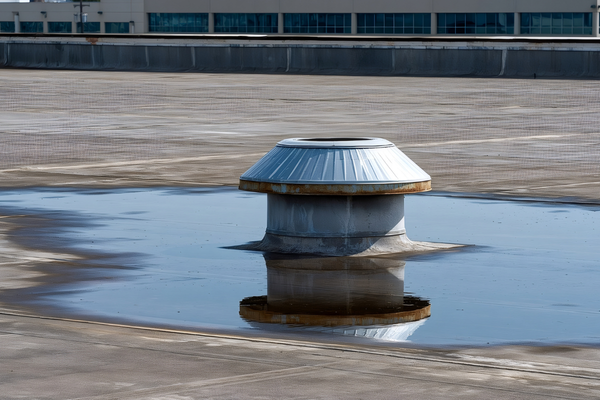
Ponding water happens when water remains on the roof after rainfall instead of draining properly. This can happen for several reasons.
Sometimes the issue is clogged drains or debris around drainage points. Leaves, branches, dirt, and other materials can block water from moving off the roof. In other cases, the roof may have low spots, aging materials, compressed insulation, or previous repairs that changed the way water flows.
Rooftop equipment can also affect drainage. HVAC units, curbs, pipes, and other penetrations create areas where water may collect if the surrounding details are not maintained. On commercial roofs, even small drainage problems can become more noticeable after repeated summer storms.
Signs of Commercial Roof Drainage Problems
Property managers do not need to climb onto the roof to know something may be wrong. In fact, roof access should be left to trained professionals, especially after rain or during hot weather.
There are several signs that may point to a drainage issue:
- Water stains on ceilings or interior walls
- Tenant reports of leaks after heavy rain
- Overflowing gutters or scuppers
- Water spilling down the side of the building
- Standing water visible from a safe access point
- Vegetation or debris collecting near roof edges
- Musty odors inside the building
- Recurring leaks in the same area
- Sagging ceiling tiles or damp insulation
- Previous repair areas that continue to leak
If you notice any of these warning signs, it is best to schedule a commercial roof inspection before the issue spreads. Drainage problems can be easier to manage when they are caught early.
How Drainage Issues Lead to Leaks
Water will usually find the weakest point in a roof system. On a commercial roof, that may be a seam, flashing detail, drain area, roof penetration, or previous repair.
When water sits on the roof, it has more time to test those areas. The longer it remains, the greater the chance that small weaknesses can turn into active leaks. This is especially true during repeated storms, when the roof does not have enough time to dry out between rounds of rain.
Drainage issues can also make it harder to identify the source of a leak because water may enter in one area, travel through insulation or decking, and show up somewhere else inside the building, which is why a professional assessment matters.
Why Routine Maintenance Helps Reduce Repair Costs
Routine commercial roof maintenance is one of the most effective ways to reduce drainage-related problems. A maintenance visit can help identify debris, blocked drains, damaged flashing, open seams, membrane punctures, and other issues before they become emergencies.
For property managers, this creates a clearer record of roof condition. It also helps with planning. Instead of waiting for a tenant to report water coming through the ceiling, you can stay ahead of potential issues and make informed decisions about repairs, maintenance, or future budgeting.
Preventive maintenance is especially important for buildings with multiple tenants, retail spaces, medical offices, industrial facilities, schools, warehouses, and multifamily properties. A roof issue in one area can affect more than one occupant or department, so early action can help reduce disruption.
How Spann Roofing Supports Commercial Roof Management
Spann Roofing helps commercial clients assess roof condition, document concerns, and recommend practical next steps. Whether the building needs a repair, maintenance plan, drainage correction, or longer-term roof planning, our team focuses on clear communication and solutions that fit the property.
Our Guardian Service is designed to support commercial roof management through preventive maintenance, inspection reports, infrared scans, and roof asset planning. For property managers and building owners, that kind of documentation can make it easier to manage budgets, communicate with stakeholders, and reduce unexpected repair costs.
Contact Spann Roofing today to schedule a commercial roof assessment and protect your building before a small drainage issue becomes a larger repair.